Which fabric suits the garment I have in mind?
Why fabric choice changes garment performance
Anmol JournalGuide
Guide 2 of 10
- Topic
- Materials
- Reading time
- 2 minutes
- Sections
- 04
- Figures
- 02
01Fibre sets the hand
Cotton is breathable and comfortable against the skin, and it creases. Viscose and rayon, both regenerated from cellulose, drape fluidly and feel cool, but need care in washing. Polyester holds its shape and resists creasing. Linen is cool and strong, with the slubbed look and easy creasing of flax.
Blends trade these qualities against each other. A little elastane adds stretch to a woven; polyester in a cotton blend reduces creasing.
02Weave decides behaviour
In a plain weave, each weft yarn passes over one warp yarn and under the next. Poplin, cambric and voile are all plain weaves; they differ in yarn fineness and density, from crisp and close to light and sheer.
In a twill the interlacing steps along one yarn each row, drawing a diagonal across the cloth and making it denser and harder-wearing. Yarn-dyed fabrics take their colour before weaving: the check or stripe is built from the coloured yarns themselves.
Fig. 01Plain weave, twill and a yarn-dyed check
Plain weave
Each weft yarn passes over one warp yarn and under the next.
Seen in: Poplin, Cambric, Voile
Twill
The interlacing steps along one yarn each row, drawing a diagonal line.
Seen in: Twill
Yarn-dyed check
Coloured yarns in both warp and weft cross to form the check.
Seen in: Checked and striped shirting
Warp yarn on top Weft yarn on top Coloured yarn on top (check)
03Weight and finish
Weight, usually given in grams per square metre, decides opacity and body. Finishing after weaving, such as washing, softening or peaching, changes the hand without changing the fibre.
Shrinkage is the finishing question that matters most for fit. A fabric that shrinks after the garment is made takes the measurements with it, which is why shrinkage is checked and allowed for in the pattern.
A fabric that shrinks after the garment is made takes the measurements with it.
04Matching fabric to the garment
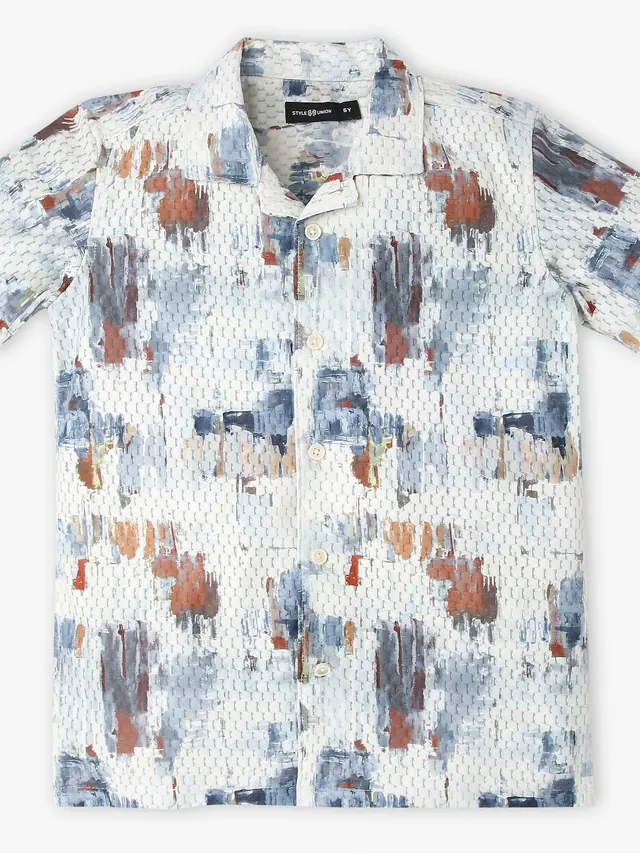
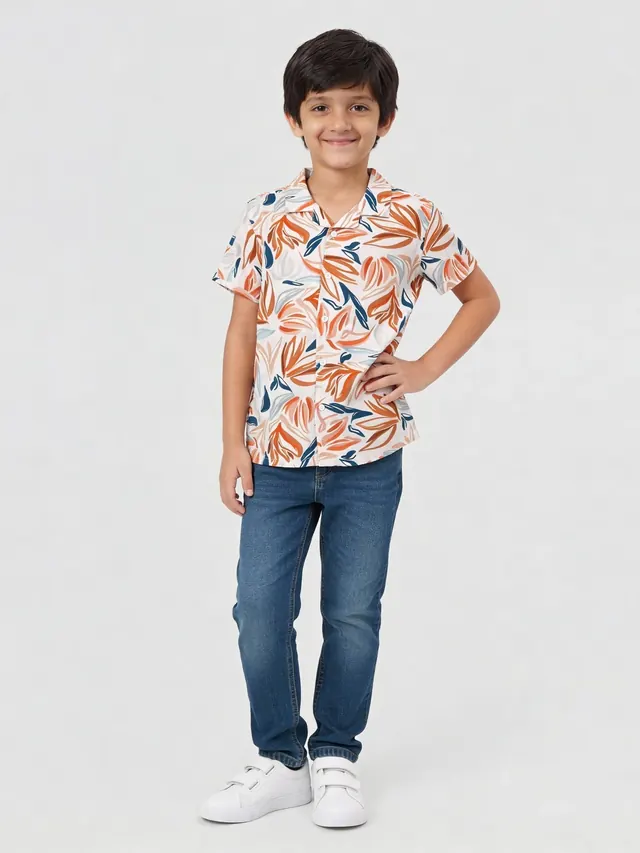
Our current boys range shows the logic. The checkered shirts are made in cotton, where a crisp shirt shape matters; the printed Cuban and camp collar shirts are in polyester, rayon or viscose, which carry a print and drape into a relaxed shape.
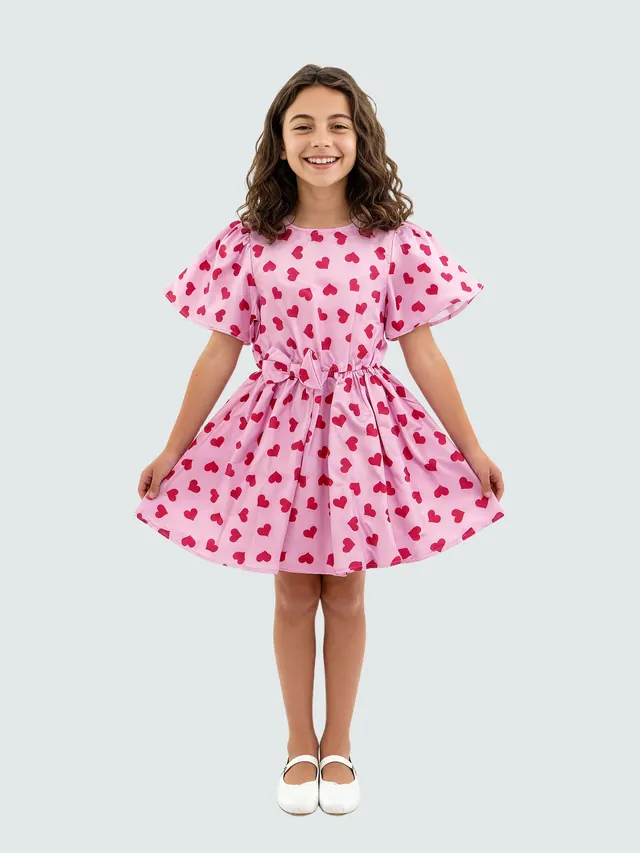
Girls frocks run in viscose, cotton and polyester: viscose for movement, cotton for structure and comfort, polyester for prints that hold their colour and shape.
Keep reading