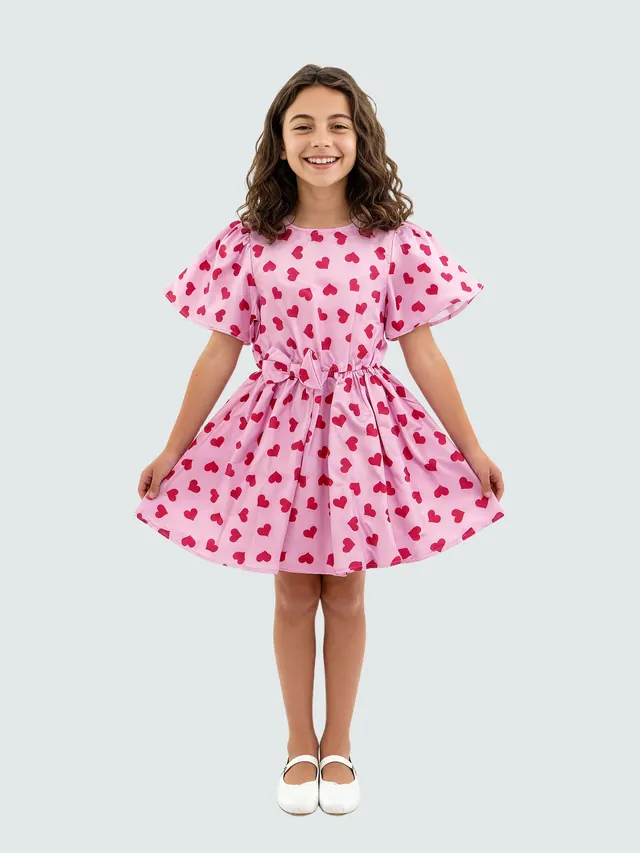
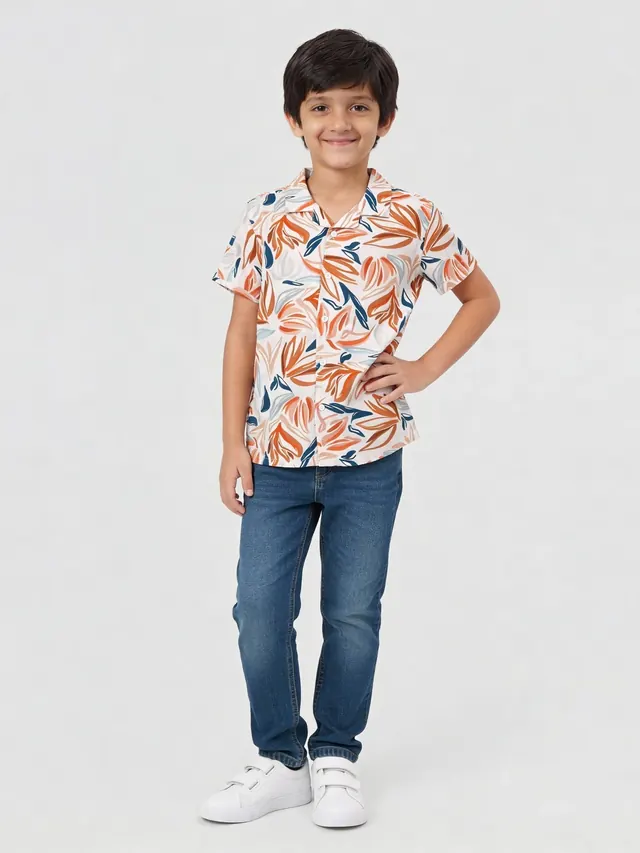
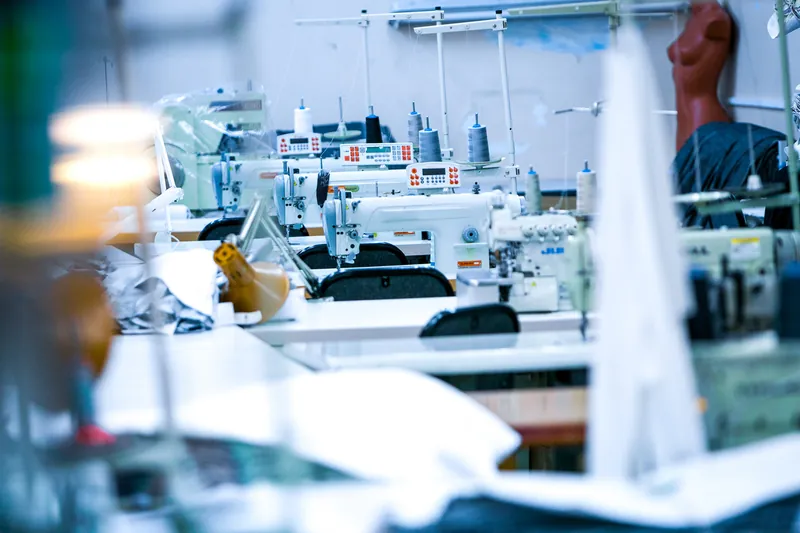
How does a sketch become a production style?
Sketch in. Production style out.
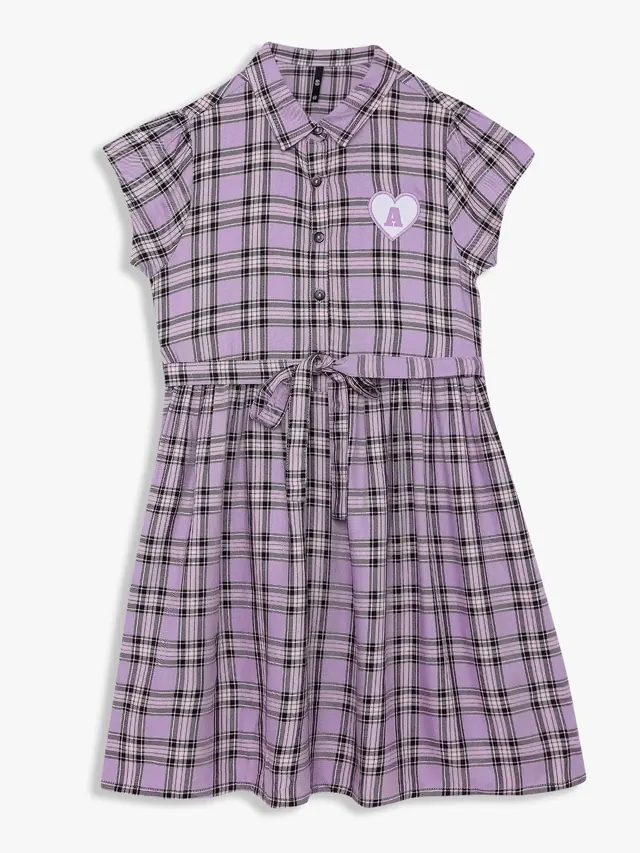
Tech pack
Reference style
- Style
- Girls Checkered Knee Length Frock
- Reference
- 917596
- Fabric
- Viscose
- Pattern
- Checkered
- Construction
- Woven
Shared with target quantities
A tech pack sheet, drawn from a real style in current production.
Input, process, output.
What arrives at design & development, what happens to it, and what leaves for the next stage.
- 01
Input
- 01.1Sketch, mood board or design direction
- 01.2Tech pack with a measurement chart, where one exists
- 01.3Reference garment, or a photograph of one
- 01.4Target quantity, price and delivery window
- 02
Process
- 01
Interpretation
- 02
Technical development
- 03
Pattern
- 04
Fabric
- 05
Trims
- 06
Construction
- 03
Output
A production-ready style: pattern, fabric, trims and construction agreed and ready to sample.
Why it matters
Most bulk problems are development problems found late. A seam type, a fabric width or a trim settled here costs nothing; the same question found on the cutting table costs a delivery date.
Design & Development, specified
Design & Development: what we do, your part, the check and the deliverable
- What we do
- 01Read the brief against the reference and list every open question before work starts
- 02Develop styling in-house when you bring a direction rather than a finished design
- 03Draft the first pattern in-house where a full tech pack is not available
- 04Propose fabric qualities against the brief and develop trims to match
- 05Write the construction for the floor, operation by operation
- 06Cost the style once fabric, trims and value addition are settled
- Buyer involvement
- You share the brief, answer the open questions, choose between fabric and trim options and comment on the first proto.
- Quality check
- The development pack is checked against the brief before sampling: measurements complete, fabric and trims specified, construction written for every operation.
- Deliverable
- A production-ready tech pack and the first pattern, handed to sampling.
What you bring to development.
A brief can arrive as a sketch, a tech pack, a size chart or a garment. Each is read for what it settles and what it leaves open.
| Topic | What it is | How it is handled |
|---|---|---|
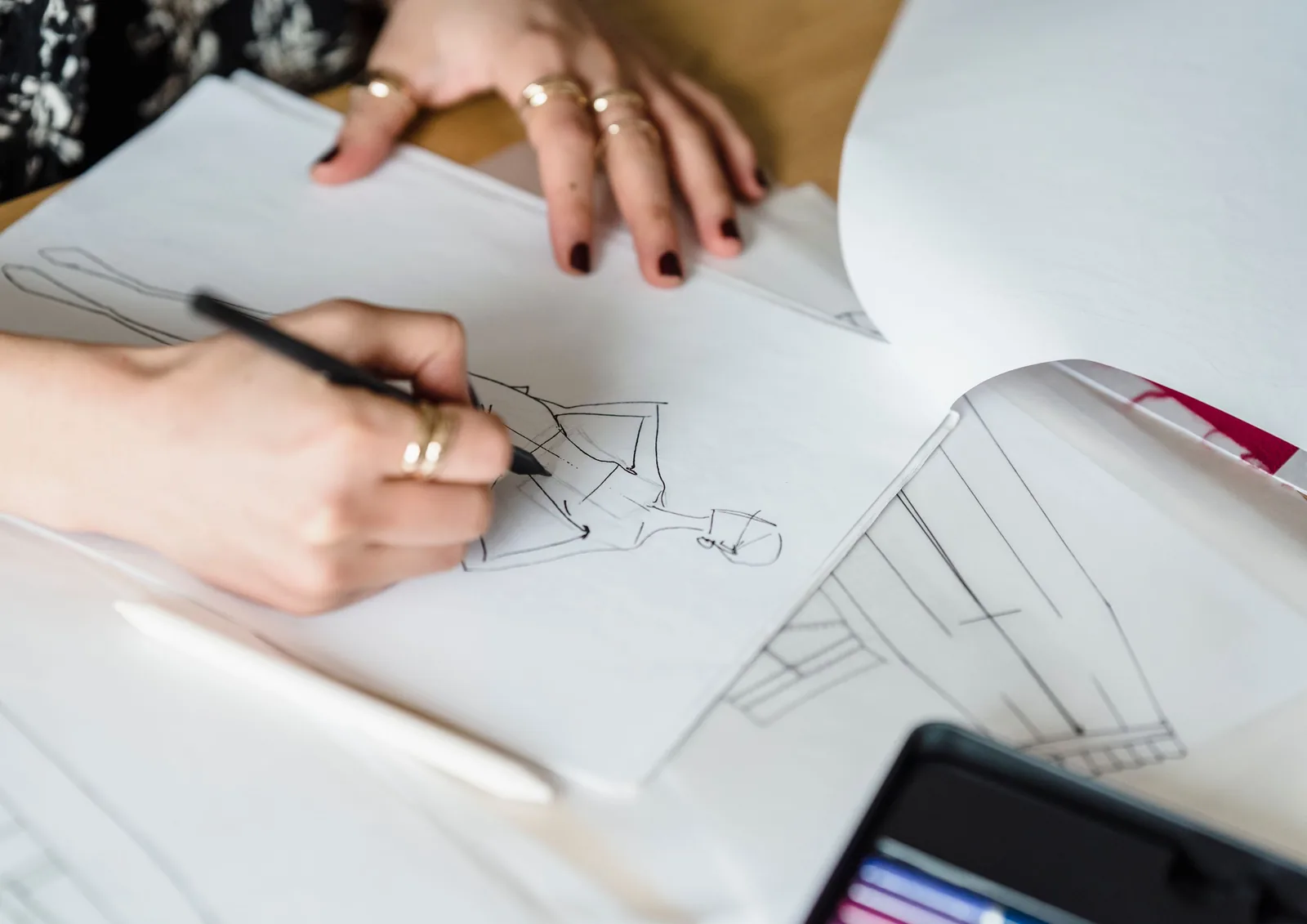
| 01Sketches | A drawing of the idea: silhouette, proportion and the key details. Enough to start a pattern, rarely enough to cost one. | The sketch is read for what it leaves open (length, ease, closures, seams) and those points are confirmed with you before the first pattern.You send Front and back views, with callouts for anything that matters. |
| 02Tech packs | The technical file for a style: flat drawings, a measurement chart with tolerances, construction notes, the fabric and trim list, labelling and packing. | A complete tech pack turns development into a review; a partial one turns it into a list of questions, answered before sampling.You send The tech pack as a PDF, latest revision only. |
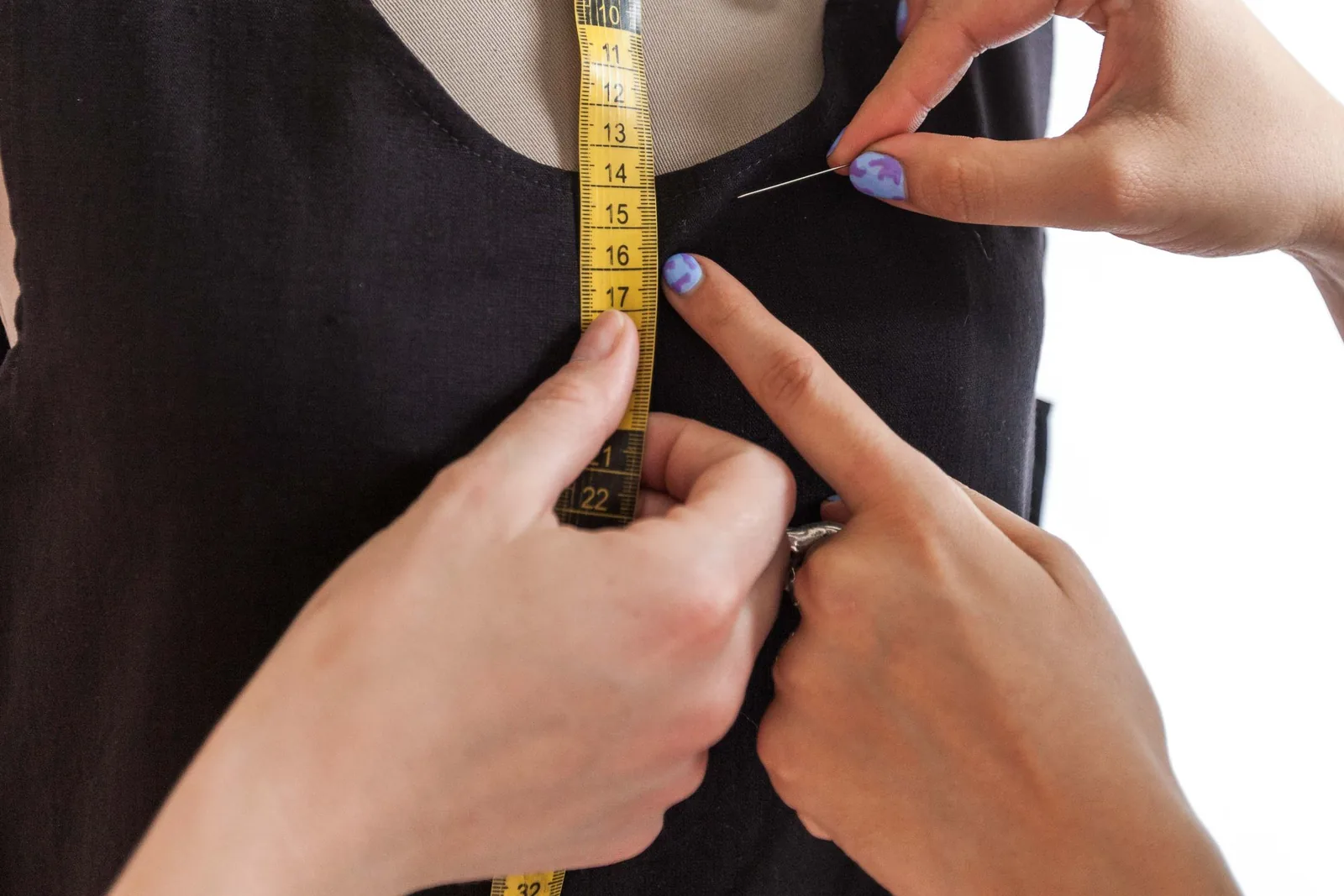
| 03Measurements | Points of measure in the base size, each with a tolerance, and the grade rules that set the other sizes. | Every sample is checked against this chart, and it is the chart QA measures bulk against.You send Your size chart and tolerances, or a reference garment in the base size. |
| 04Garment references | A physical garment, or a photograph of one, that shows a fit, a hand feel or a detail better than words can. | What the reference is for (the fit, the collar, the wash) and what should change are written down, so it guides the style instead of being copied.You send The garment, tagged with what it refers to. |
Developed in-house.
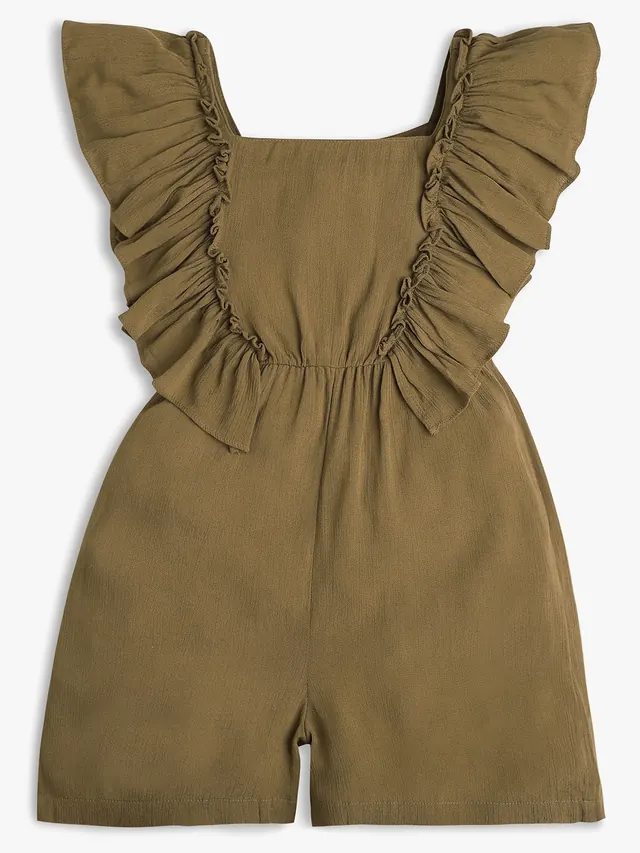
- 01Square necklineThe edge finish is agreed before the sample
- 02Ruffle frillGathered along the shoulder and down the bodice
- 03Waist seamBodice joined to the legs, gathered in
- 04Leg hemDepth and finish specified for the floor
A woven viscose jumpsuit from current production. 01 / 04
Construction interpretation
Deciding how the garment is made: seam types, finishes, closures, linings and interlinings, and the order of operations.
Where a design is drawn but not specified, construction is proposed and agreed before sampling, so the sample shows what bulk will be.
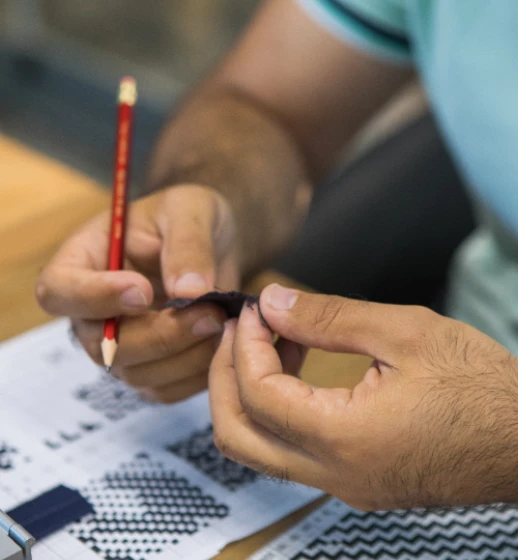
Checking a swatch against a weave design sheet at Donear, one of our fabric mills. 02 / 04
Fabric selection
Choosing the quality, weight, weave and finish for the garment's use, its price and the season.
The sample is made in the chosen quality, so it tells the truth about the bulk.
You send A swatch or the quality you have in mind, and the target price.
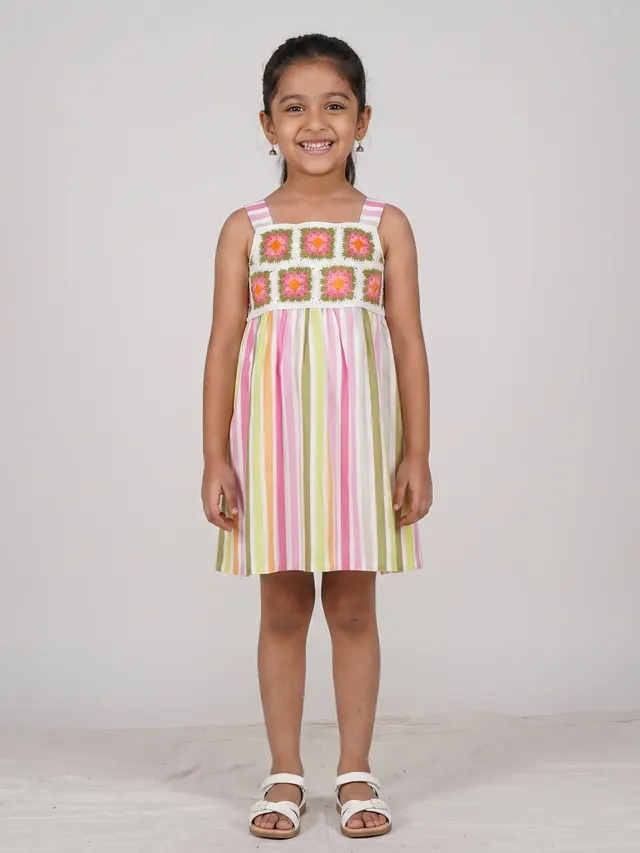
- 01Shoulder strapsWidth and attachment set in the construction notes
- 02Crochet squaresA trim, approved before bulk
- 03Striped bodyStripe direction fixed when the marker is planned
A striped cotton dress with crochet patches, from current production. 03 / 04
Trim development
Everything that is not the main fabric: buttons, zips, labels, tapes, laces, patches and thread.
Trims are matched to the fabric and the price, and approved before bulk trims are ordered.

A colourist at the shade-card wall at Donear, one of our fabric mills. 04 / 04
Colour direction
The colours of the fabric, print, embroidery thread and trims, set against references.
Colours are approved against a physical standard wherever possible, because screens and printouts do not show a colour truly. The approved shade is the standard bulk fabric is dyed to, before it is cut.
You send Colour standards or references, with the colourways you need.
From pattern to approval.
The base pattern, the size range, your comments and the sign-off that bulk is cut against.
| Topic | What it is | How it is handled |
|---|---|---|
| 01Pattern development | The flat pieces a garment is cut from, drafted in the base size from the sketch, the tech pack or a reference. | Pattern development is in-house, so fit comments go straight back into the pattern. |
| 02Grading | Scaling the approved base pattern up and down the size range by set increments at each point of measure. | Grading follows your size chart and grade rules; the graded set is what the bulk marker is planned from.You send Your size range and grade rules. |
| 03Buyer feedback | Your comments on each sample: fit, fabric, finish, colour and placement. | Comments come through one named merchandiser and go into the next revision of the pattern and the sample. |
| 04Counter samples | A sample made to match your reference or approved sample, in bulk fabric and trims, for final sign-off. | The counter sample is where development ends: once it is signed, a change becomes a new sample rather than a comment. |
| 05Approval | Sign-off on fit, fabric, colour, trims and construction. | The approved sample becomes the reference for cutting, inspection and packing. Nothing is cut in bulk before it. |
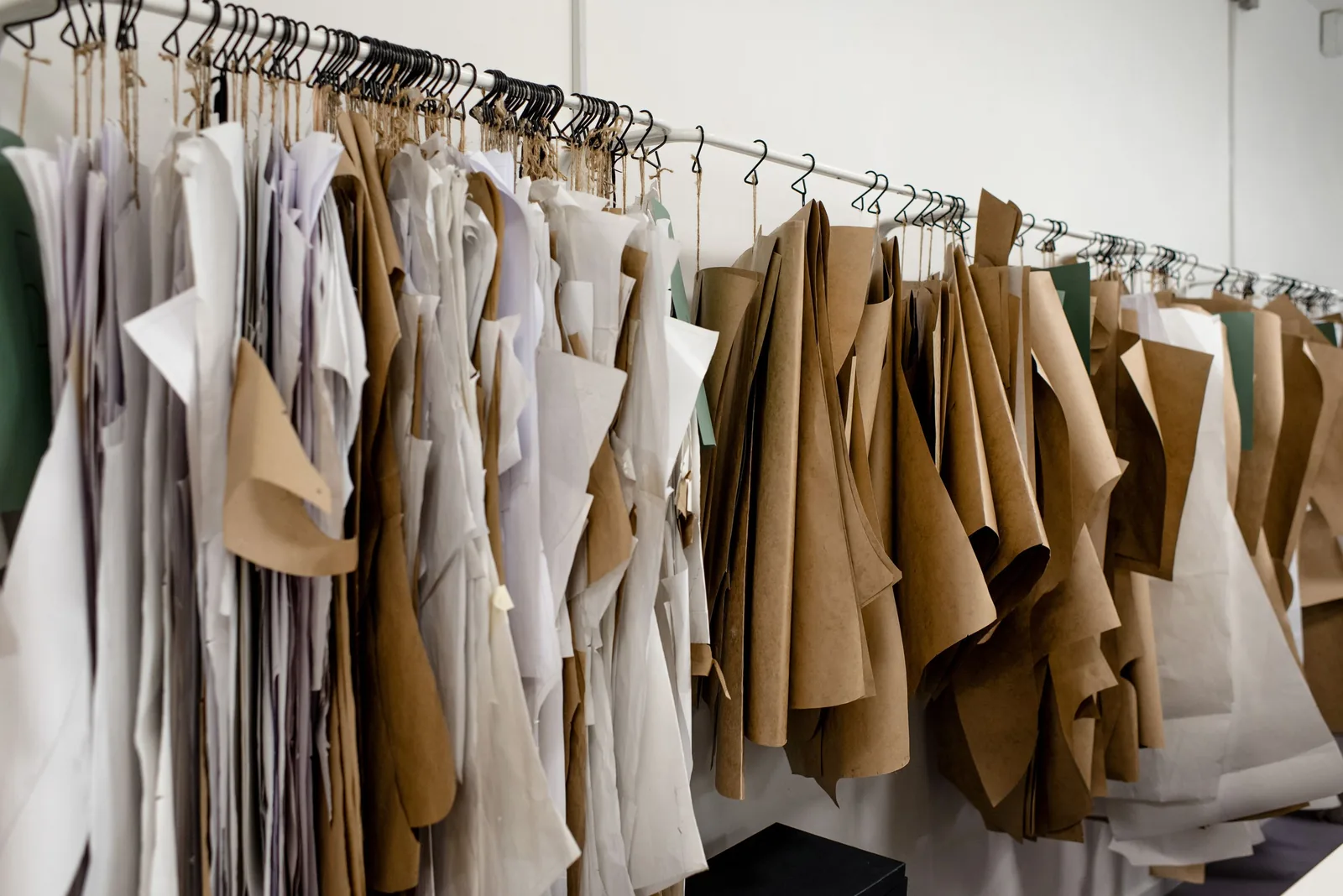
Send the sketch, the tech pack or the garment.
Share styles, fabrics and target quantities. We reply to most enquiries within one working day.